


Lea La Jornada Internacional en español aquí.

Eight Hours, 140 Years Later
Some 140 years after the struggle for an eight-hour workday erupted in Chicago, workers in Mexico have begun to win that right this year, although the reduction of the workweek will be phased in gradually through 2030. In every country except the United States, where it originated, May 1 is officially celebrated as International Workers’ Day.
It was in Chicago where workers and anarcho-syndicalist leaders, including Mexican American Lucy González Parsons, launched the fight for an eight-hour workday with the slogan: “Eight hours for work, eight hours for rest, eight hours for what we will!” It wasn’t until 1938 that the eight-hour workday was established, yet in many parts of the United States that right is still not fully respected. It’s worth remembering that May Day and its history are not part of the official calendar there; instead, Labor Day is celebrated on the first Monday of September.
However, in the U.S., the origins and history of May Day were revived by immigrant workers who organized massive demonstrations on May 1 in 2005 and 2006. International workers were the ones who brought back the memory of the Chicago martyrs, and more recently, some unions and organizations have gradually reclaimed it. The United Auto Workers (UAW) is pushing to restore May 1 as a day of struggle and succeeded in aligning its contracts with the three major U.S. automakers to expire on April 30, 2028, with the aim of calling a strike on May 1 if demands are not met. They have also called on other unions to do the same. So far, the Chicago Teachers Union and others have begun to align their contracts in that direction.
UAW leader Shawn Fain, on May 1, 2025, issued a call for international solidarity among auto workers in the United States, Mexico, and Canada to confront what he called “the disaster” of free trade. “Companies are united in their mission to squeeze us for every last cent. And we must be united in our mission to win a decent life. Why do corporations get away with it? Divide and conquer,” Fain wrote.
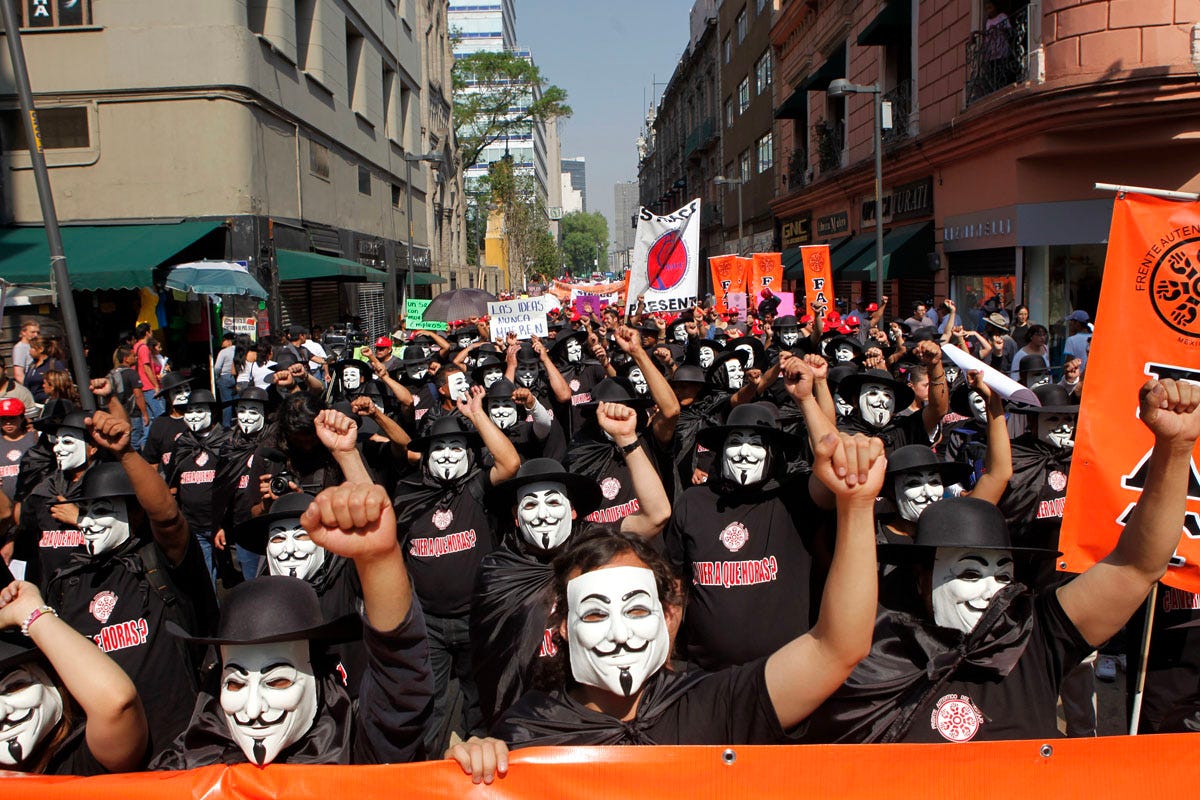
In Mexico, as in most of the rest of the world, May 1 will be marked this year with marches and public events. An eight-hour workday was the common demand in the 2025 demonstrations, and thousands of workers, from mining, education, industrial, and government sectors, marched across most states in the country with that demand.
Finally, in February 2026, it was achieved: “The proposal promoted by our President, Dr. Claudia Sheinbaum, has a very clear goal: less exhaustion, more time to live, and no harm to workers,” said Labor Secretary Marath Bolaños. “It’s not about earning less or working more,” he added.
Although the Congress of Labor has canceled the official May 1 rally in Mexico City for the seventh time, its demands include regulating the reduction of the workweek to 40 hours and revising the tax burden on workers’ benefits. A central issue is that formal employment has declined while informal work has increased.
The situation is further complicated by the presence of organized crime. A recent case: the Camino Rojo mining company in Zacatecas allegedly used narcos to intimidate workers and push them to abandon their union. A panel under the USMCA Rapid Response Labor Mechanism issued a ruling on the mine.
One of the strongest unions, the National Coordination of Education Workers (CNTE), ratified an indefinite national strike to begin during the upcoming World Cup in June, “with the aim of boycotting it” to force authorities to address their demands.
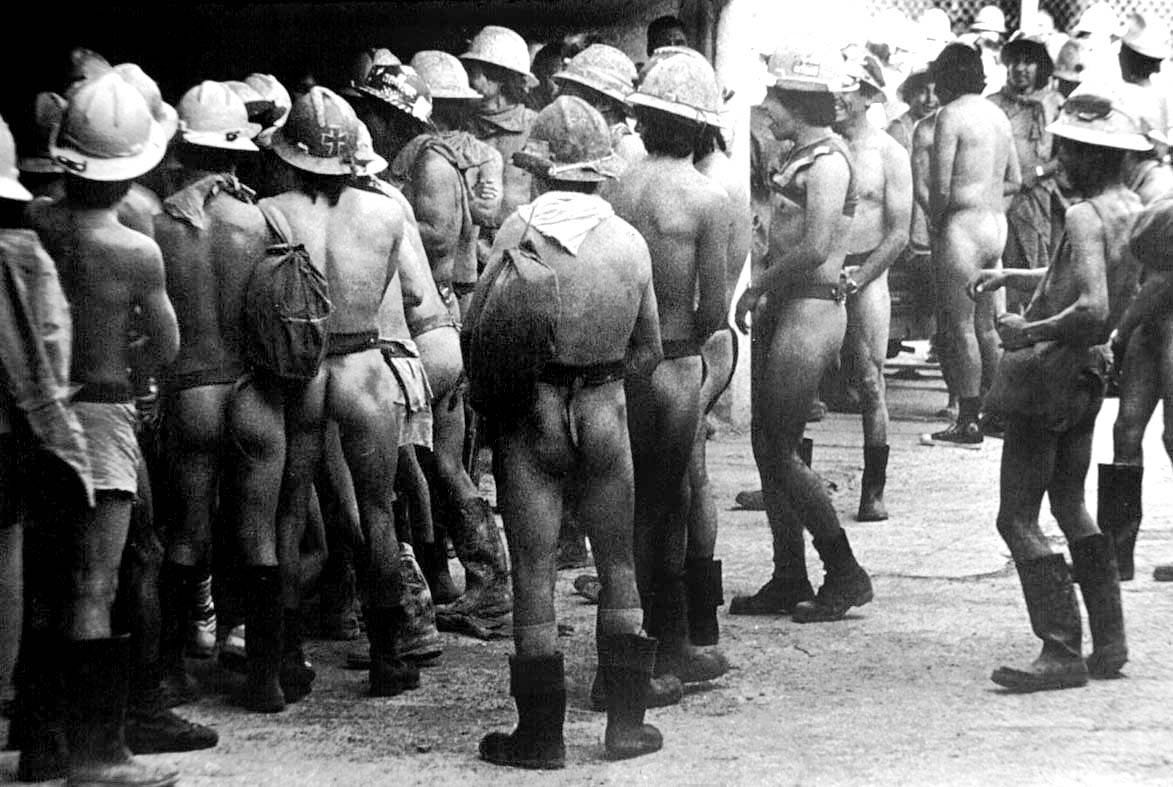
The Quote:
“If the oppressed do nothing to save their own, they deserve to be slaves.”
—Ricardo Flores Magón, 1918
In Case You Missed It

◻️ The history of Tacuba, a working-class neighborhood. Although many longtime families no longer live there, the area still preserves the history that shaped it and made it one of the most important territories in pre-Hispanic times.
◻️ Llama en los ojos: Interview with Lucero González. Trained as a sociologist, González explains how, at age 40, she grew tired of academic discourse and sought another language to express herself: photography. The exhibition Llama en los ojos opens May 2 at the Museo de la Ciudad de México.

◻️ Opposition to the spread of data centers. Protests are beginning to emerge over the installation of data centers in Mexico, most recently in Querétaro. “The catastrophe that’s coming will be visible in just a few years—that’s how serious we believe it is,” said Abelardo Rodríguez Macías of the Chichimeca Otomí Tlaxco Andamaxei La Cañada Assembly, who participated in the march. “Political parties are complicit, from city council members and mayors to the governor. They think these projects are a solution to so many shortages, when all they really generate are more problems.”
◻️ Is there proof against the governor of Sinaloa? In response to the US government's public accusations that a dozen Mexican politicians have ties to the Sinaloa Cartel, the Mexican foreign ministry pointed out that the formal extradition petition did not include any evidence beyond the indictment. “If there is no clear evidence, it is evident that the objective of these accusations is political,” the President declared. La Jornada describes these events as “heavily charged acts of political interference, compounded, to top it off, with an implicit threat,” and recalls that the DEA is not a trustworthy agency. Read the U.S. indictment here.

◻️ The CIA in Mexico, again. Political disputes over the CIA’s presence and role in Mexico have continued for a second week. The state prosecutor of Chihuahua resigned, the governor refused to testify before Congress, and President Claudia Sheinbaum insisted that details be disclosed about how two CIA agents who died in a road accident had been involved in anti-drug operations without federal government knowledge. Little clarification has come from the U.S. government, and the incident has reignited controversy over U.S. involvement in Mexican anti-narcotics operations. In 2025, Sheinbaum denied a Reuters report claiming CIA collaboration with Mexican armed forces: “That report says CIA agents are working with the Mexican Army in operations. That is absolutely false—it is not true.” The tragic accident in Chihuahua only adds fuel to the fire, writes Luis Hernández Navarro. According to the Los Angeles Times, the CIA has participated in three anti-drug operations in the state this year.
◻️ Migrant children relive their journey, now from a soccer field. Their hopes are to stay healthy, be with their families, and “wait for Trump to go away.” Meanwhile, just weeks before the World Cup begins, it is expected to generate up to 150,000 jobs.

📚 What We Are Reading
A companion reading of a kindred book, by Omar González
If you have any suggestions about the newsletter, please respond to this email and let us know.
The subscription is free.
Edited by David Brooks and Jim Cason in the United States, Tania Molina Ramírez in Mexico City, of La Jornada, and Elizabeth Coll in Tokyo, under the direction of Carmen Lira Saade and Guillermina Alvarez. More information.